Travel Tips · 7 min read
Weather in Fuengirola: Month by Month
Fuengirola's weather month by month: temperatures, rainfall, sea temperatures and the best weeks to book. Typical averages for the town and its beaches.
Costa Del Sol Unlocked · November 2026
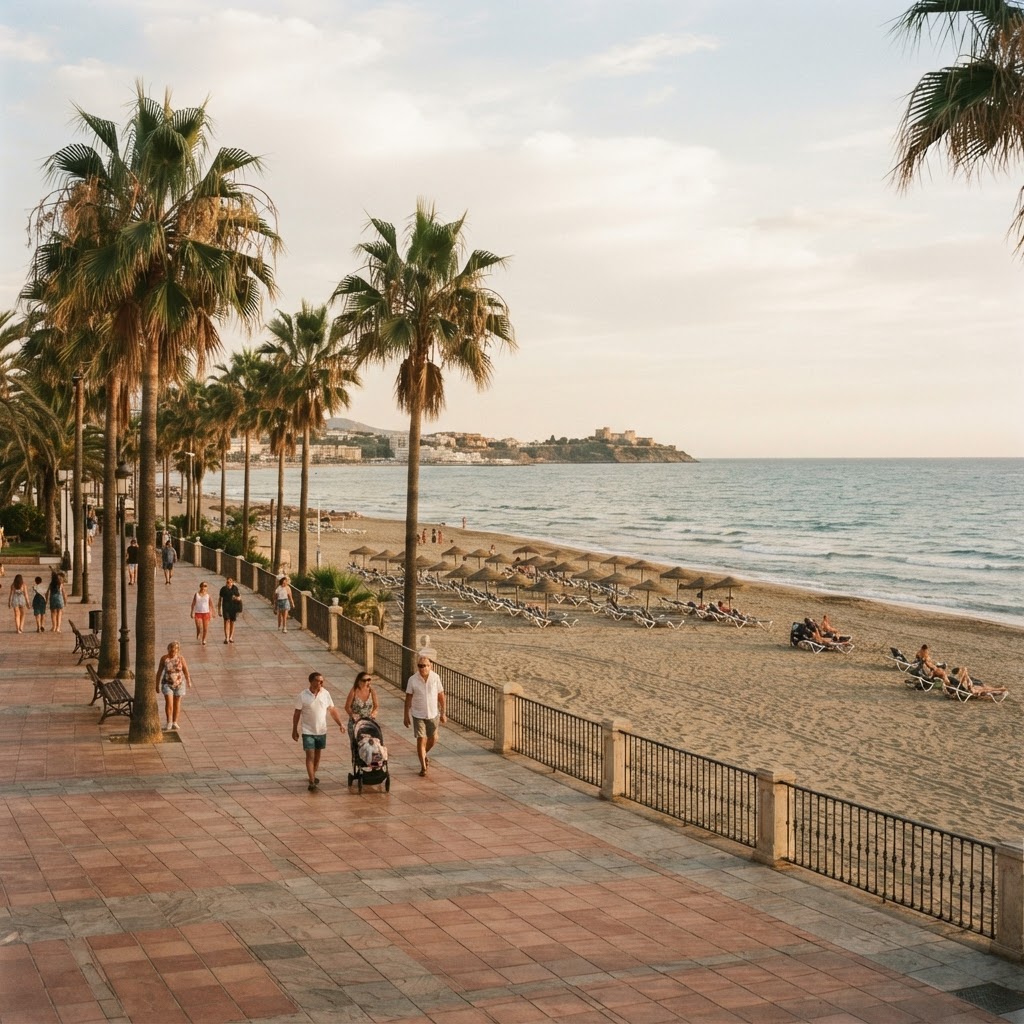
Fuengirola is the town people move to when they have decided they want the sun without the fuss. It faces south-east across eight kilometres of sand, which gives it slightly brighter mornings than its neighbours and a summer that runs a degree or two warmer than Benalmádena a few kilometres up the road.
The short answer
Book mid-June to mid-September for beach weather and a warm sea. Book May or late September for the best balance of sun, space and price. Book November to March if you want to walk the paseo in a jacket, eat fish at Los Boliches and pay winter rates.
Month by month
- January — 17°C days, 9°C nights, about six wet days. Long, bright, empty promenades.
- February — 18°C days, 10°C nights, five wet days. Almond blossom in the hills behind town.
- March — 19°C days, 11°C nights, five wet days. Changeable, with the first genuinely warm afternoons.
- April — 21°C days, 13°C nights, five wet days. Reliably pleasant, sea still cold.
- May — 24°C days, 16°C nights, four wet days. The best month of the year, in our view.
- June — 28°C days, 19°C nights, one wet day. Beach weather begins properly.
- July — 31°C days, 22°C nights, no meaningful rain. Hot, humid, full.
- August — 31°C days, 22°C nights. The warmest water and the busiest beach.
- September — 28°C days, 20°C nights, two wet days. Sea at its warmest; town still lively.
- October — 24°C days, 16°C nights, five wet days. Warm lunches, cool evenings, first rain.
- November — 20°C days, 12°C nights, six or seven wet days. Wettest month, but rarely a write-off.
- December — 17°C days, 10°C nights, seven wet days. Shorts at noon, coat after dark.
Why Fuengirola feels different
Two things shape the town's weather more than the averages suggest. The first is the orientation: a south-east facing bay catches the morning sun early and holds it, so a winter breakfast on the paseo is warmer than the temperature implies. The second is the humidity. Fuengirola sits low and flat behind its beach, and in July and August that means sticky nights — the sea breeze arrives late and leaves early.
If you are booking summer accommodation, this is the argument for air conditioning and for a room not directly over a restaurant kitchen. It is also the argument for Los Boliches or Torreblanca over the very centre, where the streets are narrower and the heat sits.
The sea
Water temperatures run about 15–16°C from January to April, 18–19°C in May, 23–25°C through July and August, and hold around 23°C into early October. The beach shelves gently for a long way out, which makes it one of the safest stretches on the coast for children — and means the water stays shallow, and warm, near the shore.
Rain, and what to do with it
Fuengirola gets around 480mm a year, concentrated between October and April and delivered mostly in short, heavy bursts. When a proper storm comes in, the town's drainage struggles and the lower streets near the river mouth can flood for an hour or two.
A wet day here is not a disaster. The covered market, the shopping centre at Miramar, the Bioparc if the rain is light, and a long lunch all work. See rainy days on the Costa del Sol for the fuller list.
When to book
The cheapest good-weather weeks are the second half of May and the last week of September into the first fortnight of October. August is the most expensive and the most crowded; if you are tied to it, book by February.
Winter is the bargain: a sea-view apartment in January costs a fraction of its August rate, and the weather is better than most of northern Europe in April.
For the town itself, see things to do in Fuengirola. For the coast as a whole, winter on the Costa del Sol and when to come, month by month.
Keep reading