Food & Drink · 3 min read
How to Judge a Proper Espeto
Sardines on a cane skewer, grilled over a fire in a boat on the sand. What separates the real thing from a printed menu.
Costa Del Sol Unlocked · November 2026
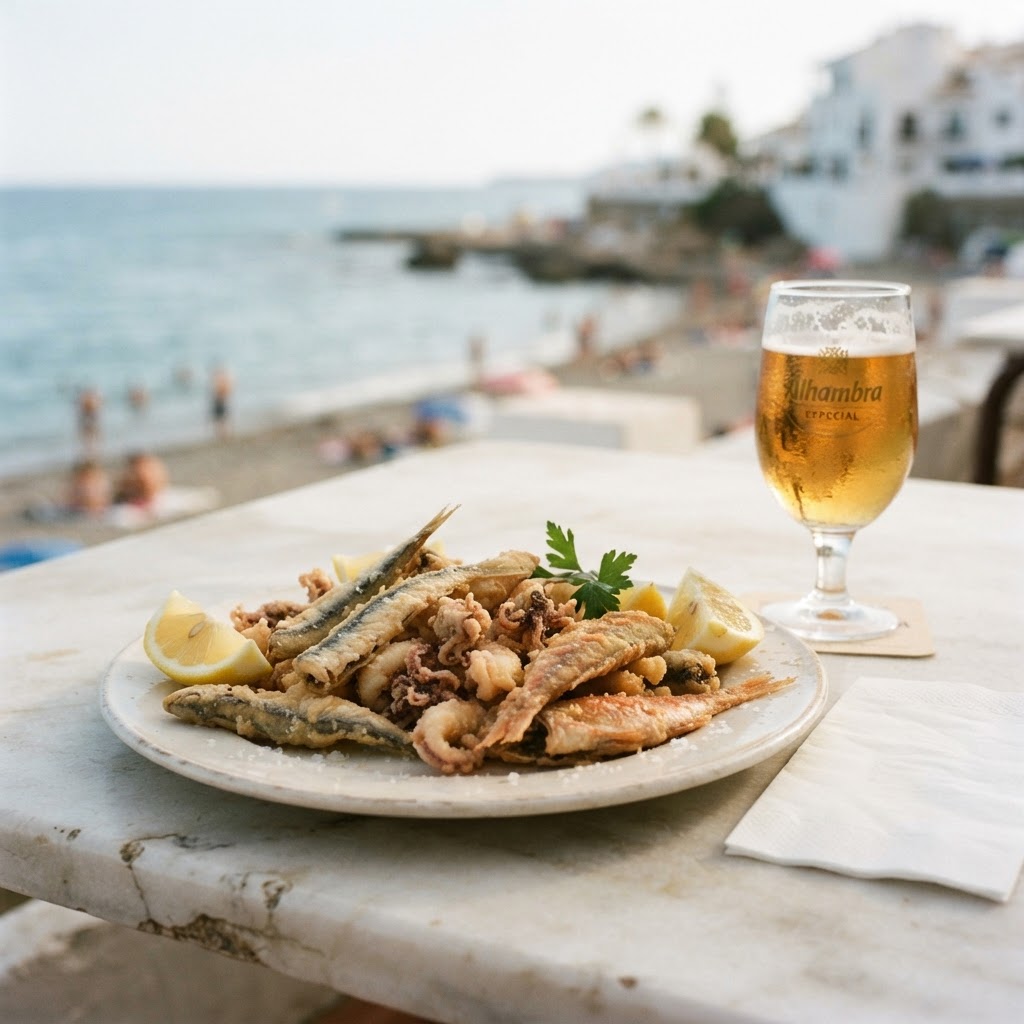
If you see a converted rowing boat filled with sand and glowing embers parked on the beach, you have found the starting point of a proper meal. In Málaga, the espeto is the gold standard of simple food. It is essentially six sardines threaded onto a cane skewer and cooked over an open fire, yet it is easy to get wrong.
The Anatomy of the Skewer
A true espeto uses medium-sized sardines, specifically those caught locally when the water temperature is right. The fish are skewered through the back, not the stomach, so they do not fall apart as the fat renders. The cane must be flexible and scorched by the heat of the fire, which should be fuelled by olive or vine wood to impart a specific, mild smoke.
Salt is the only seasoning required, but timing is everything. If the fish is salted hours in advance, the flesh draws moisture and turns mushy. The salt should be thrown on just as the fish hits the heat. This allows the skin to blister and crackle while the inside remains moist and oily.
Identifying the Real Deal
Not every beach restaurant is built the same. If the establishment relies on a gas-powered grill tucked away in a kitchen, it is not an espeto, regardless of what the menu claims. A genuine chiringuito will have the boat on the sand or a dedicated outdoor pit where the skewer master works the heat.
- Look for a boat filled with sand.
- Check that the fire is wood-fuelled, not gas.
- Observe the skin of the fish; it should be blistered and golden, not black with char.
- Ensure the fish are uniform in size.
The seasonality is non-negotiable. While you might find sardines on a menu in February, the quality is rarely consistent with the prime months between spring and autumn. If the beach is quiet and the sea is cold, ask if they have been caught locally or brought in from elsewhere. Honest staff will tell you if the day's catch is worth ordering.
The Etiquette of the Beach Table
The espeto is a tactile experience. You are expected to eat with your hands, and asking for a knife and fork marks you out as someone who does not understand the rhythm of the coast.
When ordering, you ask for the espeto by the skewer, not by the piece. It is standard to order a few to start, along with a crisp, cold beer or a glass of dry white wine. The sides should be minimal; a basic tomato salad or a simple plate of olives is sufficient. Anything more distracts from the flavour of the fish.
You will likely be sitting at a plastic table, perhaps with sand underfoot and the smell of salt and woodsmoke in the air. This is the correct environment. If the waiter brings you a plate of fish that has clearly been sitting under a heat lamp, the skewer was likely taken off the fire too early and left to wait for a table to fill. A good skewer arrives at your table steaming, with the skin still snapping slightly when you pull the meat away from the spine.
Where to Find Them
While you can find boats all along the coast from Estepona to Nerja, the local style varies slightly by town. In the fishing quarters of Málaga city, you will find the most traditional methods. As you move towards the white villages, the focus often shifts to more elaborate seafood, but the humble sardine remains the best choice for lunch.
If you are travelling in the height of summer, expect to pay more than you would in the off-season. Demand is high, and the best beach restaurants will have a queue for the limited number of seats around the boat. Always confirm the hours locally, as these places often close when the fire dies or the last of the daily catch is sold.
Keep reading