Culture & History · 4 min read
Coast Slang: 30 Words You'll Hear and What They Mean
From quillo to chiringuito, malafollá to pisha: thirty words and phrases you'll actually hear on the Costa del Sol.
Costa Del Sol Unlocked · November 2026
The local rhythm
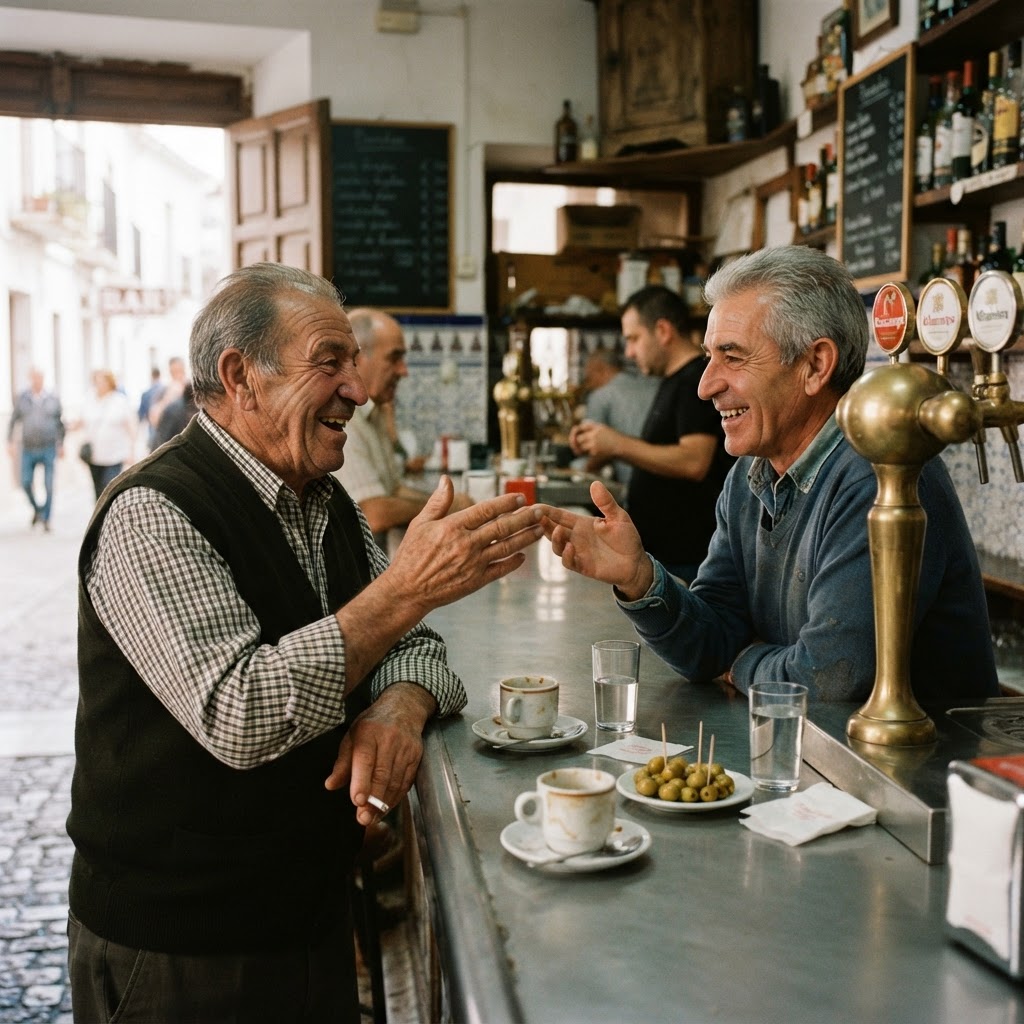
Language in Andalucia does not follow the rigid rules you learned at school. It is clipped, slurred, and heavily dependent on rhythm, with the ends of words often vanishing entirely into the hot air. If you want to connect with local life, you need to stop worrying about perfect grammar and start listening to the cadence of the street. Here is your essential guide to the words that keep the coast moving.
The basics of address and reaction
These words act as punctuation. You will hear them every thirty seconds.
- Quillo/Illo: The definitive Andalucian contraction of chiquillo. It is a universal way to get someone's attention or express surprise. Use it with friends, but avoid it in formal settings.
- Pisha: Heavily used in the western reaches towards Cadiz. It technically refers to male anatomy but acts like mate or buddy. Only use this if you have been here a few years and know exactly who you are talking to.
- Chiquillo: Used for children or to express disbelief, as in Chiquillo, what are you doing?
- Guiri: The local term for a foreigner, usually from Northern Europe. It is not necessarily insulting, but it is rarely a compliment.
- Vale: The universal okay. You will hear it at the end of every sentence.
- Hombre: Used to emphasize a point or show exasperation. Man, you are joking.
- Venga: A versatile tool meaning let's go, enough, or come on. It keeps conversations moving.
- Oye: Hey or listen. Used to grab attention.
- Mira: Look. Used to introduce a point or defend an opinion.
- Bueno: Well. Usually used at the start of a sentence to buy time or signify a shift in topic.
- Pues: So or well. Often used as a filler while thinking of the next word.
- Qué arte: What flair. Used to describe someone doing something well or with personality.
- Qué fuerte: That is intense or shocking. Used for gossip or surprising news.
The vocabulary of the table
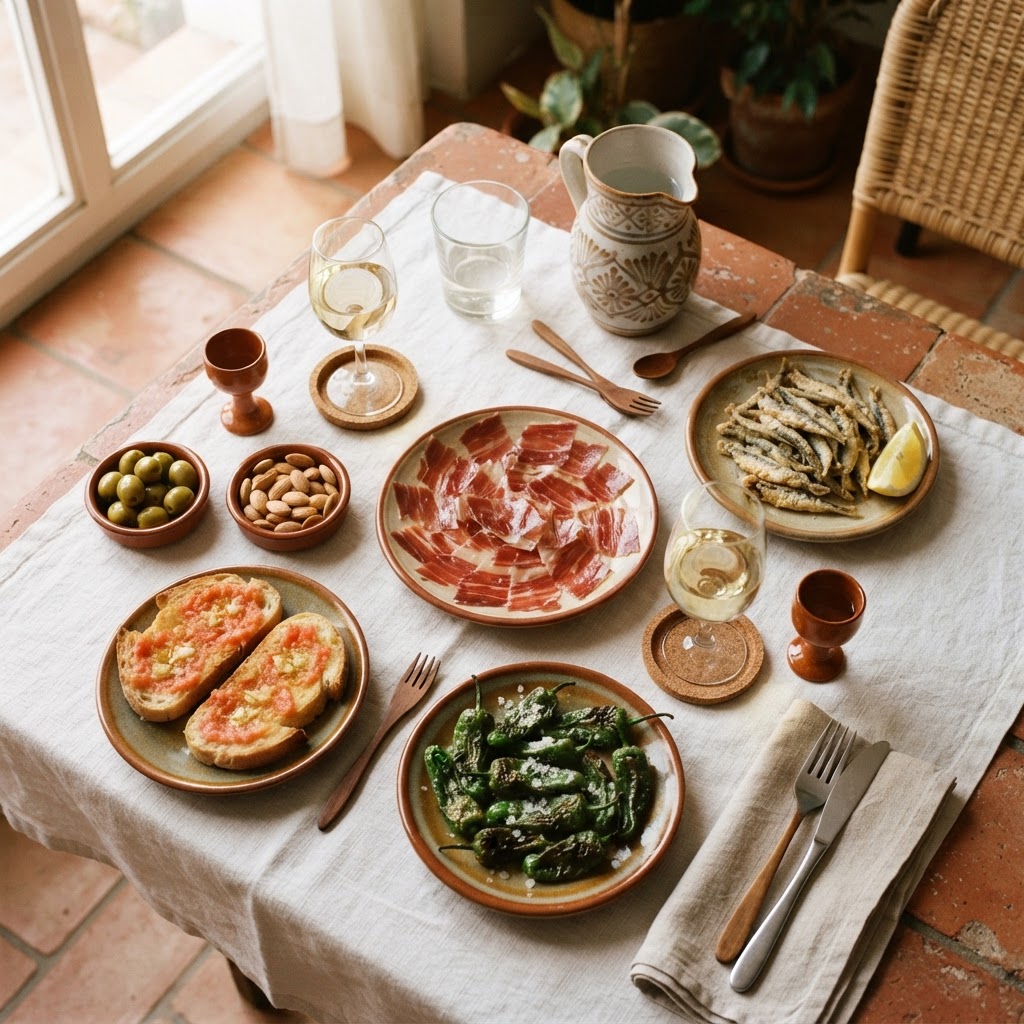
Eating and drinking here is a slow, ritualised affair. If you do not understand these terms, you are missing half the point of the coast.
- Chiringuito: A beach bar, usually serving grilled sardines and cold beer. It is the spiritual heart of the summer.
- Pescaíto: The collective term for fried fish. Do not ask for fish and chips; order a ración of boquerones instead.
- Tapear: The act of moving from place to place to eat small snacks. It is a verb, not just a noun.
- Caña: A small glass of draught beer. It is the standard unit of measurement for a mid-morning break.
- Copa: A mixed drink, usually a spirit and mixer. It is what you order after the sun goes down.
- Tinto de verano: Red wine mixed with lemon soda or bitter lemon. It is superior to sangria, which is largely for tourists.
- Sobremesa: The art of lingering at the table after a meal for conversation. This can easily last an hour.
- Siesta: A mid-afternoon rest. In smaller towns, shops will close for this. Respect the silence.
Social rituals and regional temperament
Andalucian character is shaped by deep-rooted traditions and a tendency to socialise in public spaces.
The beauty of the Andalucian dialect is its efficiency. By clipping the ends of words, the locals managed to save time for more important things, like the second round of drinks.
- Paseo: The evening stroll. This is a vital social ritual where the town comes out to walk and see who is around.
- Feria: The annual town fair. Expect loud music, horses, and very little sleep for a week.
- Caseta: The tents or marquees at the feria where the real action happens. Some are private, but many are open to all.
- Peña: A social club or brotherhood, often centred on football, flamenco, or religion. It is a core unit of local identity.
- Botellón: An outdoor drinking gathering, usually involving younger crowds and parked cars. It is noisy and best avoided unless you are twenty-one.
- Malafollá: A specific, grumpy temperament associated with the interior, but understood on the coast. It is a dry, cynical sense of humour.
- Achucharse: To cuddle or get close. Often used to describe the inevitable crowding in a busy bar.
- Diminutives (-ito/ita): Everything is softened. A café becomes a cafecito; a little bit becomes un poquito. If you want to sound less like an outsider, add these to the end of nouns.
Why it matters
You do not need to master the Andalucian accent overnight. That would be impossible even for locals, who vary wildly from village to village. The goal is to show you are listening. When you stop ordering a beer in clipped English and start asking for a caña, the service changes. When you use vale or venga correctly, you stop being a spectator and start participating in the rhythm of the place. Learn ten of these, and the coast stops being a backdrop and starts becoming your neighbourhood.
Keep reading